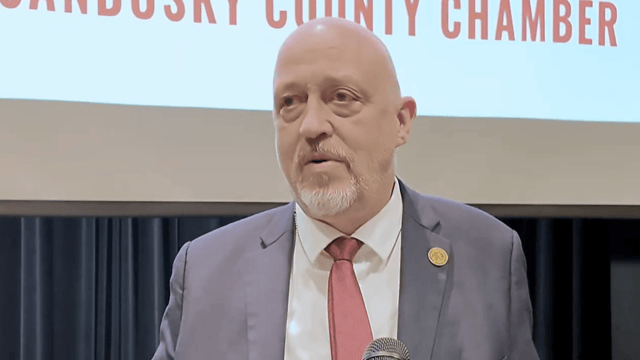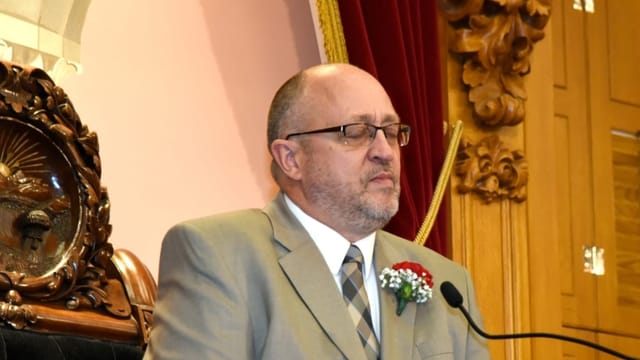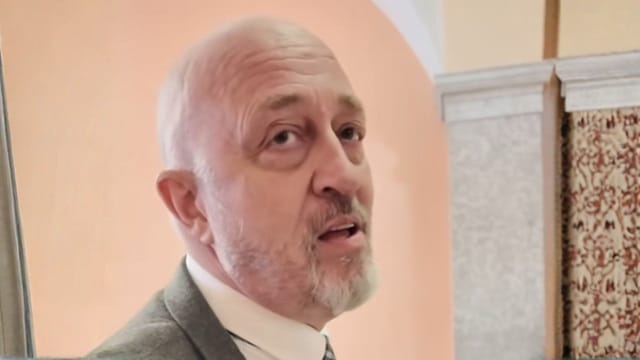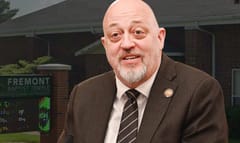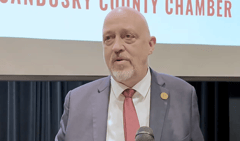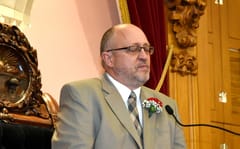
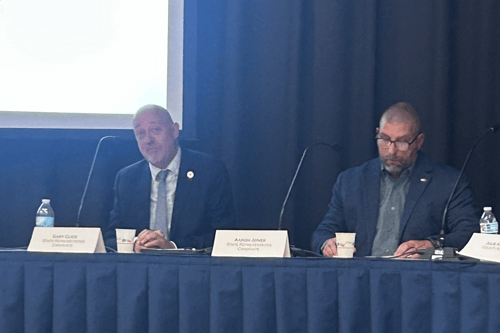
TIFFIN, Ohio — State Rep. Gary Click was booed by members of the audience Wednesday night after responding to a question about making LGBTQ residents feel safe and welcome by accusing Democratic challenger Aaron Jones of supporting positions Jones had not stated.
The confrontation came during the Tiffin Area League of Women Voters Candidates Night at Tiffin Middle School, where Click and Jones faced voters ahead of the November election for Ohio House District 88, which covers Seneca and Sandusky counties.
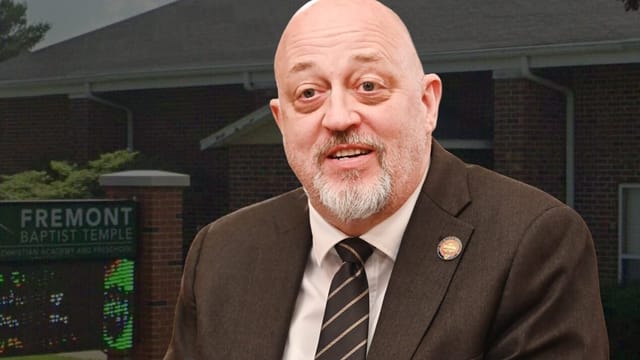
Click, a Vickery Republican first elected to the Ohio House in 2020, is serving his third term. A former Baptist pastor and community theater actor, Click quietly stepped down as lead pastor of Fremont Baptist Temple in March 2025 after 19 years and became pastor emeritus. No contemporaneous public announcement of the transition has been identified, despite Click later insisting the change had been “very public.”
Jones, a Tiffin Democrat, is a U.S. Army veteran, longtime factory supervisor and member of Tiffin City Council. He served four years as an Airborne Infantryman with the Army’s 3rd U.S. Infantry Regiment, The Old Guard, before building a manufacturing career of more than two decades. He currently represents Tiffin’s 1st Ward on City Council.
The League had established at the beginning of Wednesday’s forum that candidates were expected to focus on issues rather than personal attacks.
Asked how he would help LGBTQ residents in the district feel safe and welcome, Jones said an elected official has a responsibility to represent everyone.
“First of all, I won’t publicly attack them or anyone for that matter,” Jones said.
Jones said he would represent residents “without prejudice, without discrimination” and argued that state government should spend less time on culture-war legislation.
“There will be no culture wars because there’s more important things that this state needs done rather than focusing on culture wars and singling out groups of people for who they love or what they worship or how they worship,” Jones said.
“If elected, everyone in Aaron Jones’ district has a fair shot no matter who you are.”
When the same question went to Click, the incumbent did not initially explain how he would make LGBTQ residents feel safe or welcome. Instead, he accused Jones of misrepresenting his record and then attributed two positions to Jones that Jones had not stated.
“So for the record, what you’re saying is that you would vote to keep men in women’s sports, and you’d vote to continue pediatric sex change procedures,” Click said.
Audience members immediately booed and groaned.
“Oh, you can moan and groan all you want,” Click responded.
A woman in the crowd reminded Click: “No attacks.”
Click objected, asking whether Jones’ earlier remark had also constituted an attack, before complaining that the interruption was using up his allotted time.
“Thanks for using up my time,” Click said to the crowd.
He then said he had “shown respect to every single person” and defended his record on legislation restricting gender-affirming care for minors and transgender participation in girls’ sports.
Nothing in Jones’ answer to the LGBTQ question said he supported either of the positions Click attributed to him.
Click also did not point to a previous vote, public statement or policy proposal from Jones supporting either position during the exchange.
And one portion of Click’s attack concerned conduct already prohibited under Ohio law.
Ohio Revised Code Section 3129.02 prohibits a physician from performing gender-reassignment surgery on a minor. The law also generally prohibits prescribing cross-sex hormones or puberty-blocking drugs to minors for gender transition, with a limited exception allowing certain treatment that began before the law took effect to continue.
Those restrictions took effect April 24, 2024, through House Bill 68 — legislation for which Click was the primary sponsor.
The same legislation established Ohio’s restrictions on transgender participation in school sports. State law prohibits schools and organizations governing interscholastic athletics from knowingly allowing individuals of the male sex to compete on teams designated only for female participants.
Jones returned to Click’s accusation during the next question, which dealt with school vouchers.
“And on the last question, Gary, and you should know this, in the state of Ohio, it’s illegal to perform any gender affirming surgeries under the age of 18,” Jones said.
“Thanks to the SAFE Act,” Click interjected.
Jones finished his sentence, after which Click repeated: “Thanks to the SAFE Act.”
Click pivots from campaign finance question
The LGBTQ exchange was not the only point during the forum when Click moved away from the question he had been asked.
Earlier, the candidates were asked whether Ohio should limit or require greater disclosure of PAC and out-of-district contributions in Statehouse races and whether they would commit to raising money only from people living within the district.
Instead of initially addressing those questions, Click used much of his one-minute response to complain about reporting by TiffinOhio.net.
He eventually gave a direct answer: He would not support restricting candidates to contributions from inside the district.
“Nobody’s gonna limit that to just the district, and I would not support that as well,” Click said.
Jones said voters should examine the candidates’ publicly available campaign-finance reports and said roughly 75% to 80% of his campaign contributions came from within the district.
“None of it, none of it is coming from a corporate PAC,” Jones said. “Not one dime.”
Jones said he supported campaign-finance limits and questioned why people outside Seneca and Sandusky counties should be able to pour money into a legislative race affecting residents who live there.
“My dad always told me, ‘Follow the money,’” Jones said. “Why would you want someone from a different community pouring money into this community that they don’t live in and it doesn’t affect them?”
Data centers bring rare agreement
Click and Jones found considerably more common ground when the candidates were asked about the rapid expansion of data centers in Ohio.
Jones called data center growth in the state “out of control” and said local communities should retain authority over whether the facilities are built.
“The state has an obligation to give communities the right to decide, meaning all of you as citizens of Seneca and Sandusky County, the right to choose whether you want a data center in your backyard,” Jones said.
Jones also criticized the tax treatment of data centers and raised concerns about their effects on water, electricity and farmland.
Click responded by saying he agreed with “about 80%, if not more” of Jones’ answer.
He pointed to House Bill 646, his legislation establishing a state study commission on data centers, and said he supports maintaining local control over development decisions.
Click also said he had initially wanted a statewide moratorium before being advised that such an approach presented home-rule concerns.
School funding fight spills across questions
The candidates repeatedly clashed over public school funding.
Jones argued that continuing local levy requests demonstrate that the state is not adequately funding public schools, pointing specifically to Tiffin City Schools and its projected revenue shortfall.
“If we were funding schools, then we wouldn’t have asked for a levy in the city of Tiffin,” Jones said.
Click rejected that argument, saying public schools receive more funding than ever and pointing to increases in state education spending.
The disagreement resurfaced when the candidates were asked about school vouchers.
Click defended the voucher system, arguing that parents who choose schools such as Calvert Catholic Schools should not effectively have to pay once through taxes and again through tuition. He said the state share of education funding follows the student while locally generated money remains with the public district.
Jones argued that private and charter schools receiving public money should face stronger public accountability requirements.
“If you’re receiving taxpayer money, you ought to be held accountable to that,” Jones said.
Gas tax proposal raises questions about road funding
Click and Jones also addressed a proposed temporary suspension of Ohio’s gas tax after the moderator asked how the state would continue paying for road paving, bridge repairs and snow removal if gas tax revenue stopped flowing.
Click said he supported providing relief while ensuring transportation infrastructure remained funded, but acknowledged that he had not yet seen the legislative language and had only recently learned details of the proposal.
“I’ve just found out about this about the same time you — just shortly before you did,” Click said.
Jones said he was open to gas tax relief but cautioned against creating another hole in the state budget.
“I don’t like paying the gas tax any more than anybody else, but we can’t underfund the state,” Jones said.
He then pointed to Ohio’s public funding for the Cleveland Browns’ planned stadium project.
“There must be enough money because we gave $600 million to a billionaire to build a football stadium,” Jones said. “Maybe we should’ve used that to give you all a break.”
Click is seeking a fourth term representing House District 88. Jones is making his first run for the Ohio House after serving on Tiffin City Council.
The general election is Nov. 3.