
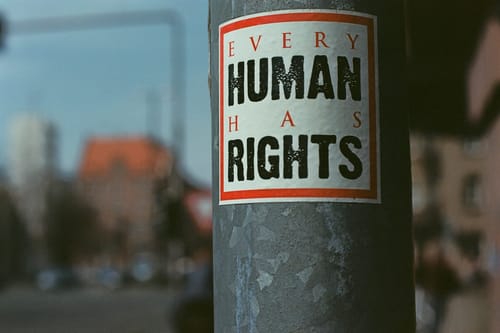
Public health is not defined only by the absence of disease, it is shaped by the safety and equity of our communities. In Ohio, discrimination has become a public health crisis that demands serious action, action we can and must take at the local level.
Discrimination of any form, whether based on sexual orientation, gender identity, race, disability, or immigration status, directly harms health.
Yet too many Ohio communities, including my own city of Lorain, still lack comprehensive protections that ensure people can live, work, and raise families without fear.
If we want healthier, safer, and more stable cities, we must stop framing equity as divisive politics and finally recognize it for what it is: a public health necessity.
As someone who has written and passed protections across multiple Ohio jurisdictions, including at the county level, I’ve seen firsthand how discrimination fuels psychological distress, homelessness, chronic illness, and suicide.
After these protections were adopted, I received hundreds of messages from families and individuals who finally felt safe enough to seek mental health support which is a shift that mirrors what research has shown for years.
Local health officials I’ve spoken with consistently reinforce that point, that exclusion damages health outcomes at every level.
The cost of this intolerance isn’t abstract.
A 2015 study published in Social Psychiatry and Psychiatric Epidemiology developed the “Costs of Discrimination Assessment,” which quantified how stigma interrupts daily life.
The findings were pretty stark: discrimination pushed individuals to withdraw from the workforce and disengage from their local economy.
Twenty percent of respondents reduced visits to family doctors out of fear of prejudice, and many skipped dental care altogether.
When people avoid preventive health care because they fear mistreatment, manageable issues grow into emergencies, for them and for our local systems.
The economic impact is equally undeniable.
A 2021 analysis by the Federal Reserve Bank of San Francisco estimated that racial and ethnic inequities have cost the U.S. economy $51 trillion in lost output since 1990.
Ohio feels these losses every day. Whenever a qualified worker is sidelined, a family is priced out due to bias, or an entrepreneur is denied capital, our economy loses value.
More recent data makes the problem even clearer.
The Federal Reserve’s 2024 Small Business Credit Survey found that Black-owned businesses were denied financing at more than twice the rate of white-owned firms (39% vs. 18%).
Research from the National Bureau of Economic Research showed that resumes with “white-sounding” names receive 50% more callbacks than identical resumes with “Black-sounding” names.
And when North Carolina passed a single discriminatory bill targeting LGBTQIA+ residents, the state lost $3.7 billion in investments and business, according to an Associated Press analysis.
Here in Ohio, the losses may be quieter, but they are just as damaging and harmful.
The Williams Institute estimates that stigma-driven health disparities alone cost our state more than $150 million every year in lost productivity and health care spending.
Ohioans are practical people. We believe that if you work hard and contribute to your community, you should get a fair chance. Discrimination violates that belief. It judges people not by their character or their contribution, but by who they are and that is not who we are as a state.
We often talk about politics as a battleground, but our communities should be the common ground.
Ohio has always been a place of builders, people who look beyond division and focus on what we can create together.
We cannot build our strongest future if we leave some of our strongest contributors on the sidelines.
Ending discrimination is not about pulling Ohio left or right, but it is about moving Ohio forward. And we are ultimately not defined by party lines, but by how we treat one another.
No Ohioan should have to leave the place they love to find respect or other opportunities. I
t is time to stop building higher fences and start building a longer table, one with room for every voice, dignity for every neighbor, and opportunity for every single family.
Let’s come together as the architects of the future we want, a state where every resident can contribute, succeed, and belong.
That is how we grow stronger economically, and more importantly, how we grow better as a people.
This story is republished from the Ohio Capital Journal. View the original article.