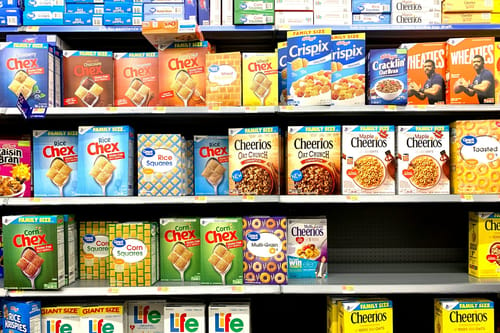

Some of this year’s most competitive U.S. Senate races are in states with skyrocketing rates of food insecurity. It could become a liability for Republican candidates.
The Bureau of Labor Statistics reports that grocery costs soared in 2025, with banana prices up 5.9% and coffee up nearly 20%. These spikes were primarily due to inflation and President Donald Trump’s tariff policy.
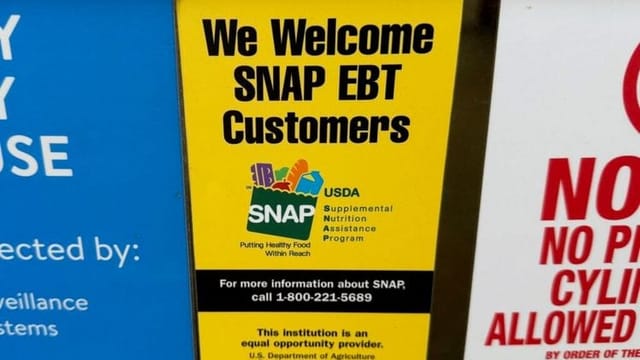
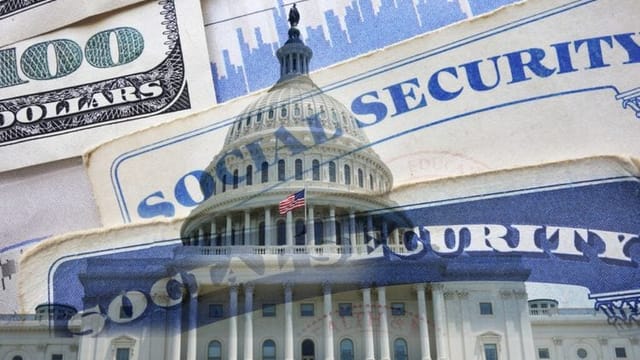
For Americans already struggling with high costs, the outlook was made worse by cuts to SNAP in the One Big Beautiful Bill Act (OBBB). About 4 million Americans receiving food assistance will see their benefits shrink significantly over the next eight years as a result.
“I’ve already had to make cuts to my grocery list,” Nikki, a mother of two from Iowa, told Unrig Our Economy. “I don’t know how families like mine are going to make ends meet.”
The average cost of groceries last year rose 4.75% in Ohio, 4.3% in Maine, 3.9% in Florida, and 3.8% in Texas. In Alaska, prices rose only 2.9%, but the state already had some of the highest food prices in the country because of its remote location and runaway fuel costs.
Each of these states has a Republican senator facing reelection in 2026.
Ohio Sen. Jon Husted backed OBBB despite an Urban Institute analysis warning that the law would jeopardize food assistance for 717,000 Ohio families. Feeding America, a nonprofit tracking hunger in the United States, says that one in seven Ohioans are now facing food insecurity.
In a January 2026 radio interview, Husted defended cuts to safety-net programs, telling host Kayala Blakeslee that Ohioans struggling with high costs simply need to work harder.
“Our work ethic is broken,” Husted said. “We don’t have the work ethic in this country that we once had, and we literally have the federal government telling people we will give you more money if you stay home than if you go to work.”
A similar dynamic exists in Maine, where 100,000 families are at risk of losing food assistance and one in five children are facing hunger.
Sen. Susan Collins did not vote for OBBB, but the bill would not have become law without her. She voted in June 2025 to advance the bill to the Senate floor, more or less guaranteeing its final passage, with or without her support. She is now campaigning as an opponent of the law.
Florida Sen. Ashley Moody, Texas Sen. John Cornyn, and Alaska Sen. Dan Sullivan all voted for OBBB and, unlike Collins, have boasted about doing so. Both Moody and Cornyn characterized the law’s passage as a historic achievement.
Sullivan said that “no state fared better than” Alaska under OBBB, despite the law imperiling food assistance for 27,000 Alaska families, about 4% of the state’s total population.
A handful of House Republicans running for open U.S. Senate seats are also facing questions about OBBB and its effect on food prices.
Iowa Rep. Ashley Hinson supported OBBB, despite food costs rising 3.7% in her state and the law curtailing food assistance for 134,000 of her neighbors.
Georgia Reps. Buddy Carter and Mike Collins are competing in a primary to be their state’s Republican nominee for Senate. Both backed OBBB, and Carter has boasted about his role in shepherding the bill into law.
“I was proud to be a leader in crafting this legislation and shepherding it through the Energy and Commerce Committee,” Carter said in a July 2025 press release.
All of these lawmakers will need to face court of public opinion. A November 2024 Data for Progress survey found that 78% of voters view SNAP favorably. An Associated Press poll from the same period found that about half of Americans want more funding for SNAP, not less.
A group of Democratic governors warned in a June 2025 letter to congressional leaders about the effect SNAP cuts would have on their states.
“If states are forced to end their SNAP programs, hunger and poverty will increase, children and adults will get sicker, grocery stores in rural areas will struggle … and state and local economies will suffer,” the letter said.
This story was originally published by American Journal News.