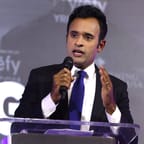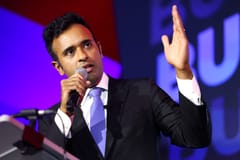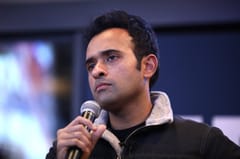
An overseas social-media operation is paying people to post political videos favorable to Ohio Republican gubernatorial candidate Vivek Ramaswamy, according to a new investigation by The Atlantic.
The report found two campaigns within a larger political “clipping” network that offered additional compensation for favorable Ramaswamy content.
Participants in the broader operation were also instructed to use U.S.-based proxy servers and conceal that they were posting from outside the country, according to The Atlantic.
The result is political content that can appear in Americans’ TikTok, Instagram and YouTube feeds without viewers necessarily knowing that the person posting it may be overseas or financially incentivized to promote a particular candidate.
Who is funding the Ramaswamy-focused effort remains unclear.
The Atlantic reported that the network did not publicly identify the source of money behind the Ramaswamy campaigns, and its investigation did not establish that Ramaswamy or his campaign directly paid for the operation.
Ramaswamy’s campaign did not immediately respond to requests for comment from TiffinOhio.net.
TiffinOhio.net asked whether the campaign, any campaign consultant, vendor or subcontractor had paid for, coordinated with, supplied content to or otherwise participated in the operation described by The Atlantic. The campaign was also asked whether it knew who was financing the Ramaswamy-specific payments.
Ramaswamy campaign has repeatedly touted ‘grassroots’ support
The revelation comes as Ramaswamy’s campaign has repeatedly portrayed enthusiasm for his candidacy as an organic grassroots movement.
In announcing its 2025 fundraising totals, the campaign said Ramaswamy had received “overwhelming grassroots and donor enthusiasm.” Campaign manager Jonathan Ewing pointed to the campaign’s average contribution and said the operation was “driven by grassroots energy.”
The newly reported clipping operation raises a different question: how much of the pro-Ramaswamy political content appearing organically in voters’ social-media feeds is actually organic at all?
The Atlantic’s reporting describes an organized system in which participants can be compensated for generating views on political clips, with additional incentives available for content favorable to Ramaswamy.
That distinction may be invisible to the person watching the video.
A voter encountering a favorable Ramaswamy clip on TikTok or Instagram may see what appears to be another user’s spontaneous political commentary. The Atlantic’s investigation shows that at least some favorable Ramaswamy content is instead being encouraged through financial incentives.
Who is paying remains unanswered
The Atlantic traced portions of the broader clipping ecosystem to material uploaded by people who appeared to work for Enclave & Key, a Las Vegas marketing company whose founder, Blake Wynn, has publicly described knowing Ramaswamy.
The magazine did not establish that Enclave & Key funded the Ramaswamy campaigns or determine who ultimately supplied the money.
That distinction is significant. There is currently no public evidence establishing that Ramaswamy’s campaign directly financed the operation.
But there is now evidence that someone is paying additional money for favorable Ramaswamy social-media content — and neither the report nor Ramaswamy’s campaign has identified who that is.
For Ohio voters, that leaves a basic transparency question unanswered as the gubernatorial race heads toward November: when apparently grassroots political content praising Ramaswamy appears in their social-media feeds, who is actually behind it?