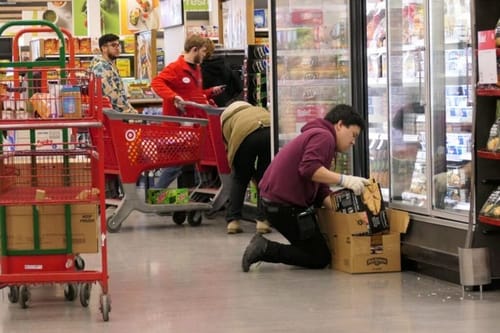
Workers in more than 20 cities and states will see the minimum wage increase next month as local governments continue to raise the wage floor amid federal inaction.
The federal minimum wage of $7.25 per hour has not increased since 2009, losing more than 30% of its purchasing power since then because of inflation.
Alaska and Oregon will see statewide increases in the wage floor July 1: Alaska’s $13 minimum wage will increase to $14 per hour. In Oregon, where the minimum wage varies by region, minimum wage rates will reach as high as $16.80 in the Portland metropolitan area.
In California, where the minimum wage varies across industries, many healthcare workers will see a spike in the wage floor July 1. Hospitals and healthcare systems with more than 10,000 employees must pay most employees at least $25 per hour, safety net hospitals must pay most workers at least $19.28 per hour and dialysis clinics must pay $24 per hour.
This past January, the minimum wage increased across dozens of cities, counties and states. An annual report from the National Employment Law Project, a nonprofit advocating for workers’ rights, found that 88 jurisdictions will raise their minimum wages by the end of this year.
While voters in conservative and liberal states have approved minimum wage increases, the minimum wage remains stagnant at $7.25 across 20 states, according to that organization.
The issue failed to gain traction last week in Oklahoma, where voters rejected a proposal to gradually increase the state’s $7.25 rate to $15 per hour by 2029.
“Tonight, voters chose to protect Oklahoma’s economic momentum and one of our greatest competitive advantages: affordability,” said Chad Warmington, president and CEO of the State Chamber, which opposed the increase, after the vote.
Opponents of minimum wage hikes, which often includes small business owners, say the mandates can lead to job cuts and higher prices for consumers. But proponents say that a higher wage floor is needed to keep up with rising costs and that workers tend to spend more as their wages go up, boosting the overall economy.
David Ottoson, who owns the retail store Rainbow Foods in downtown Juneau, Alaska, said the state’s minimum wage levels the playing field for businesses. In a news release from the advocacy organization Business for a Fair Minimum Wage, he credited higher wages as playing a role in the longevity of his natural foods grocery store, which has operated since 1980.
“We’re doing well, and a big reason is that we treat fair wages as an investment. They’re how you keep good people and run a business that lasts,” Ottoson said in the release.
Most of July’s scheduled minimum wage increases are planned in cities across the country.
In Chicago, the minimum wage will increase from $16.60 to $17.05. San Francisco’s rate will increase from $19.18 to $19.61 per hour. And in Washington, D.C., the minimum wage will increase from $17.95 per hour to $18.40 per hour.
Stateline reporter Kevin Hardy can be reached at khardy@stateline.org.
This story was originally produced by Stateline, which is part of States Newsroom, a nonprofit news network which includes Ohio Capital Journal, and is supported by grants and a coalition of donors as a 501c(3) public charity.
This story is republished from the Ohio Capital Journal under a Creative Commons license. View the original article.