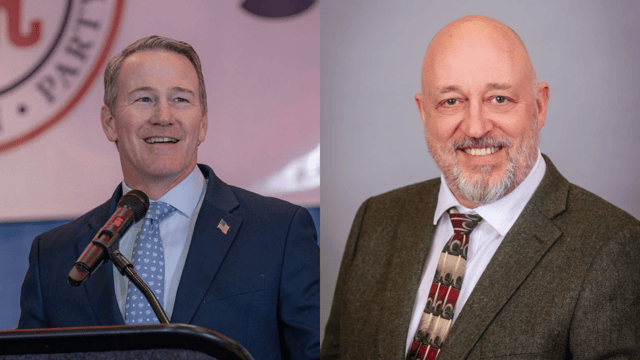
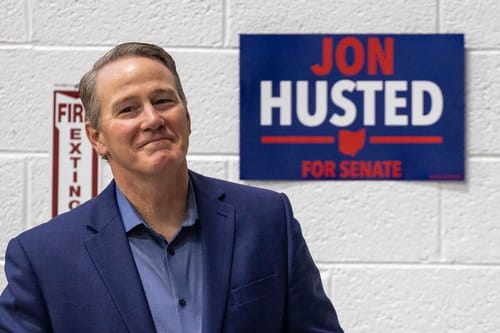
For the second time in roughly two months, a prominent figure in U.S. Sen. Jon Husted’s campaign has left after reporters uncovered disturbing information that apparently escaped the campaign’s vetting process.
This time, it was Husted’s political director.
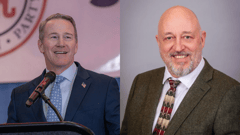
Stephen Woytek, 25, was fired Friday after The Washington Post reported that he had used a photograph of Nazi SS soldiers as his Facebook profile picture and maintained more recent online content celebrating Rhodesia, the former white-minority-ruled state in what is now Zimbabwe.
Husted’s campaign said it decided to part ways with Woytek after The Post contacted the campaign about his social-media history.
“While he denies negative intent, his social media activity displays a complete lack of judgement and disregard for its impact on others,” a Husted campaign spokeswoman told The Post. “Sen. Husted demands better of those who represent him.”
The campaign said Husted made the decision to remove Woytek immediately after learning about the material.
But The Post reported that Husted’s campaign did not answer questions about whether or how Woytek’s social-media accounts had been vetted before he was hired as political director in August.
That question carries added weight because Woytek is not the first Husted campaign figure to leave after reporters uncovered publicly discoverable information about his past.
In July, Andrew Havas resigned as Husted’s volunteer Franklin County campaign chair after NBC News asked the campaign about a 2009 guilty plea in a criminal case involving a 15-year-old.
Husted’s campaign said then that Havas had never disclosed the case.
Two months later, the campaign is again explaining why someone chosen to represent Husted is gone only after journalists brought damaging information to its attention.
Nazi SS photograph remained publicly accessible

According to The Washington Post, Woytek changed his Facebook profile picture in 2018 to a historical photograph depicting soldiers from the Leibstandarte SS Adolf Hitler division.
The Leibstandarte began as Adolf Hitler’s personal bodyguard unit before becoming a division of the Waffen-SS, the military arm of the Nazi organization responsible for extensive war crimes and atrocities during World War II.
The profile photograph showed actual SS soldiers holding captured Soviet banners and remained publicly accessible on Woytek’s Facebook account Friday, according to The Post.
The newspaper also found an account bearing Woytek’s name and photograph on Pinterest with a board titled “WWII Uniforms.” Its only two images appeared to depict Nazi-era German uniforms.
Woytek also participated in historical reenactments.
Photographs linked through a reenactment organization appeared to show Woytek dressed in an SS uniform at a 2018 event where Nazi flags were displayed. He would have been 16 at the time.
Woytek has also portrayed soldiers from other sides and conflicts, including a Union soldier during Civil War reenactments and an American soldier from the 83rd Infantry Division during World War II reenactments.
He told The Post that his interest in the SS was historical, not ideological.
“I want to be unequivocal: I reject the racist and antisemitic ideology the SS and Nazi Germany represented,” Woytek said.
Woytek said he participates in reenactments because he believes younger generations should be educated about history and acknowledged that he should have exercised better judgment in how he presented those activities online.
Recent playlist praised white-minority-ruled Rhodesia

But another part of Woytek’s online activity was much more recent.
A Spotify account bearing his name and photograph maintained a public playlist called “Tales From Rhodesia.”
Its description read: “homesick for a place that no longer exists.”
The playlist featured songs including “National Anthem of Rhodesia,” “Rhodesians Never Die” and “Rhodesia.” The Post reported that music was added to the playlist as recently as August.
Understanding what Rhodesia was — and what it has come to symbolize — is critical to understanding the significance of the playlist.
Rhodesia was the name used by the government that controlled what is now Zimbabwe after declaring independence from Britain in 1965 rather than accept a transition toward majority rule. A small white minority maintained political control over the country’s much larger Black population.
The regime fought a lengthy war against Black nationalist insurgencies before collapsing and giving way to internationally recognized Zimbabwe in 1980.
Decades later, nostalgia for Rhodesia has been adopted in parts of the white-supremacist movement.
The Anti-Defamation League says Rhodesia has become a “lost cause” among white supremacists, who have embraced Rhodesian imagery and slogans including “Rhodesians never die.” The ADL cautions that Rhodesian symbols are not automatically evidence of extremist beliefs and must be evaluated in context.
The white supremacist who murdered nine Black worshippers at Emanuel African Methodist Episcopal Church in Charleston in 2015 displayed Rhodesian imagery and operated a website called “The Last Rhodesian.” The gunman who killed three Black people at a Jacksonville, Florida, Dollar General store in 2023 also wore a Rhodesian Army patch.
One song included on Woytek’s playlist, “Zimbabwe Ruins,” depicts modern Zimbabwe in degrading terms and uses a racial slur for African troops, according to The Post.
Woytek did not answer The Post’s questions about the Rhodesia playlist or what he intended by it.
The playlist was made private Friday.
Another vetting failure
Woytek’s departure comes just two months after Husted’s campaign lost another representative when reporters uncovered information the campaign said it did not previously know.
Andrew Havas had been named Husted’s volunteer Franklin County campaign chair in December and appeared publicly on behalf of the campaign.
As TiffinOhio.net previously reported, Havas resigned in July after NBC News contacted Husted’s campaign about a criminal case dating to 2008.
Havas was 22 when he was originally charged with sexual misconduct with a minor in Mahoning County in a case involving a 15-year-old, according to court records reviewed by NBC News.
The sexual-misconduct charge was later reduced to one count of misdemeanor assault as part of a plea agreement. Havas pleaded guilty to the assault charge in 2009, was sentenced to 90 days in jail, fined and ordered to have no contact with the minor.
Husted campaign spokesperson Amy Natoce said Havas had not told the campaign about the case.
“Upon learning the facts, we immediately accepted his resignation as a campaign volunteer,” Natoce told NBC News at the time.
Havas’s conviction was a matter of public record.
Woytek’s Facebook profile photograph, Pinterest account and other social-media activity were likewise publicly accessible.
In both cases, damaging information about people selected to represent Husted became an issue not because the campaign announced that it had discovered the material through its own vetting, but after journalists began asking questions.
That leaves Husted facing a question larger than either individual controversy: how his campaign is deciding who gets entrusted to represent him.
Woytek was not an obscure volunteer. As political director, he held a senior role in one of the most closely watched U.S. Senate campaigns in the country.
Havas was not simply a supporter, either. Husted’s campaign selected him to serve as its Franklin County chair, representing the campaign in Ohio’s most populous county.
The campaign’s response has followed a similar pattern in both cases: once reporters uncovered the information and brought it to Husted’s attention, the person was gone.
The unanswered question is why the campaign did not find it first.
Woytek previously worked for northwest Ohio lawmaker
Woytek also has ties to northwest Ohio politics.
Before joining Husted’s Senate campaign, he served as a legislative aide to state Rep. Haraz Ghanbari, a Perrysburg Republican representing Wood County and surrounding areas.
Woytek graduated from The Citadel in 2024 and serves in the National Guard, according to The Post.
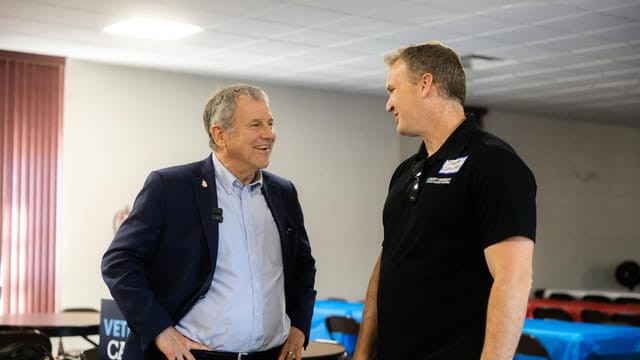
Husted is facing former Democratic U.S. Sen. Sherrod Brown in November in one of the country’s most competitive Senate races.