

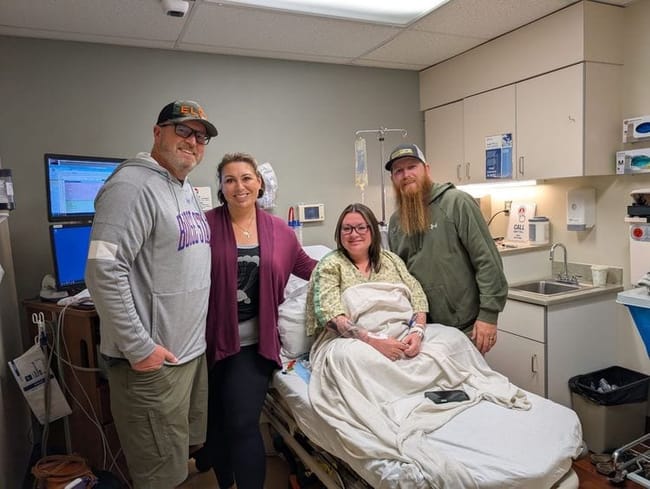
Brooke Green thought she needed a mammogram.
Green, a Democratic state representative in Idaho, knew that breast cancer ran in her family and she “just had an inkling” that she should be tested.
She was two weeks shy of the day her last remaining embryo would be implanted through in vitro fertilization. It was the one shot she had left to give her firstborn son a sibling, since it took several rounds of in vitro fertilization to get pregnant the first time.
The mammogram confirmed her fears: There was in fact a lump in her breast, and a biopsy of the tumor confirmed it was cancer. Worse yet, it was a type of cancer fueled by estrogen and progesterone, two of the main hormones that skyrocket during pregnancy. She likely could not get pregnant and be treated for cancer at the same time.
“The doctor’s file said if you had gotten pregnant, this could have been a disaster,” Green said.
Several years earlier, Green had cosponsored bipartisan legislation, enacted in July 2023, codifying the best practices already in use by surrogacy agencies in Idaho, a state that has been called the unofficial capital of surrogacy in the United States. Last year, she found herself calling one of the agencies she’d worked with on the bill to ask for their help, this time as a client. She hired a surrogate to carry her second child, another boy, who was born in June.
But opposition to the two ways that Green had her children, IVF and surrogacy, is rising.
In the past two years, Republicans in Idaho and four other states have added specific anti-IVF language to their state party platforms, and some anti-abortion groups, including Students for Life of America and Live Action, have become increasingly outspoken in their opposition to both IVF and surrogacy.
One reason is that many same-sex couples use both methods to have children, and many conservatives believe children should be raised by heterosexual married couples. Conservative critics also connect surrogacy to immigration, saying it facilitates “birth tourism” and birthright citizenship. And they note that IVF can involve the discarding of some embryos, which they say is akin to abortion.
The latter is connected to the idea that a fetus or embryo is a person, with legal rights.
As of June, lawmakers in at least 17 states had introduced 36 bills this year that would codify personhood rights for embryos or fetuses, according to the Guttmacher Institute, a reproductive rights advocacy group. Opponents were able to defeat them by arguing that they might limit IVF, which remains broadly popular.
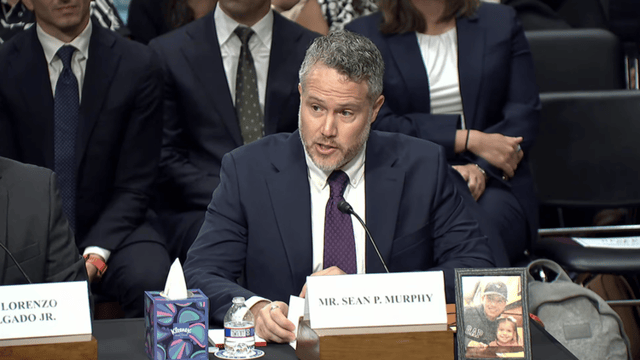
Meanwhile in Washington, D.C., Republicans in Congress have blocked legislation that would directly protect IVF as a fertility treatment.
Elizabeth Carr, the first IVF baby born 44 years ago in Virginia, said she has been advocating against so-called fetal personhood bills for the past 15 years, but the rhetoric opposing IVF in particular is getting louder and the threats are growing.
“As somebody who is a product of this technology, I always think of it in terms of, ‘Geez, I hope I’m not the last first of something,’” Carr told Stateline.
Political attention
IVF and surrogacy as fertility treatments make up a small percentage of total births nationwide, but the number is increasing gradually every year, and IVF is the most popular assisted fertility technology. In March, the Society for Assisted Reproductive Technology reported that for the first time, more than 100,000 babies were born with the help of IVF.
According to the American Society for Reproductive Medicine, babies born through surrogacy represented about 14 out of every 100,000 deliveries between 2017 and 2020.
President Donald Trump has discussed supporting policies that would lower the cost of IVF treatment, which typically costs tens of thousands of dollars per cycle, but so far, the actions taken by the administration on the topic have been limited.
In June, however, the Texas Republican Party adopted language in its 2026 platform that opposes public funding for IVF, and calls for regulation of the assisted reproduction industry as a whole, including mandatory reporting on embryo creation and storage. It also says in one section that the Texas Legislature must “protect fetal life from destructive practices, such as IVF and commercial surrogacy.”
“We support a ban on contract surrogacy involving foreign nationals, which may involve a form of trafficking and may lead to claims of citizenship. We also support prohibiting third-party egg and sperm donations and the commercialization of human reproduction in Texas; and support policies that promote the welfare of children, medical transparency, and the protection of biological parents,” another portion of the platform reads.
The Idaho Republican Party also added language to its 2026 platform saying it opposes “the destruction of human embryos.” Republicans in Missouri, North Carolina and Oklahoma adopted similar language in 2024 and 2025.
“Party platforms are mostly about intraparty politics and jockeying for position, but at the same time, you have to pay attention, because that symbolism matters,” said Sean Tipton, chief advocacy and policy officer at the American Society for Reproductive Medicine.
Green, the Idaho legislator, has put significant time and effort into developing relationships with Republicans, including by sharing her stories of fertility struggles and bringing her firstborn son to the Idaho Capitol during the legislative session.
She tried to pass a bill protecting IVF access in Idaho in 2024, but it failed. But another bill that would have established personhood from the moment of conception also failed after Green’s fertility doctor told a legislative committee it would threaten her clinic’s ability to continue to offer IVF treatments.
But Green thinks surrogacy is next on the list for Idaho legislators to try to limit in the 2027 session.
“We’re going to see them, I have no doubt,” Green said.
International implications
Some advocates for IVF say conservative opposition is just as much about trying to prevent same-sex couples from accessing fertility treatments as it is about an objection to embryo destruction. Tipton thinks that extends to the objection to surrogacy as well, but goes further in his criticism of groups such as the Heritage Foundation, the conservative think tank that produced the Project 2025 policy blueprint for Trump’s second term.
“For groups like Heritage, (surrogacy) is a nice synergy that allows them to be xenophobic, homophobic and anti-choice all at once,” he said.
Emma Waters, a senior policy analyst at the Heritage Foundation, refers to surrogacy as “baby selling.” She noted in a recent interview that people from countries that are enemies of the U.S. can hire a surrogate and obtain citizenship. She said the U.S. is in a cold war with China, and by age 35, a surrogate-born child from China could run for president. The group opposes allowing residents of other countries to hire U.S. surrogates.
“If (the American Society for Reproductive Medicine) spent less time lobbing insults and more time ensuring patients actually receive the care its own guidelines call for, American families would be better served,” Waters told Stateline, responding to Tipton.
Waters added that she thinks couples turn to IVF too early without exploring the underlying causes of infertility, an idea that ties back to a conservative philosophy called restorative reproductive medicine, which also discourages the use of birth control.
“We also make no apologies for raising serious ethical and policy questions about commercial surrogacy — including the commodification of women and children and the documented use of U.S. surrogacy arrangements to obtain birthright citizenship,” Waters said.
In a blog post last month, Waters said in the past six months, she has received more requests for help drafting legislation to regulate surrogacy than any other topic.
In November, U.S. Sen. Rick Scott, a Florida Republican, introduced a bill that would prevent “adversarial nations” from hiring Americans as surrogates. The list would include China, Iran, North Korea and Russia. It has 13 Republican cosponsors, but has not advanced in the Senate.
A recent study found that between 2014 and 2020, about 32% of surrogate pregnancies were for international couples. About 41% of those were from China, where surrogacy is illegal. The next-highest percentages were France and Spain, at about 9% and 8%, respectively.
Ashley Kirk-Robertson, an Idaho resident who delivered Green’s newborn baby in June, doesn’t see it the same way. Green’s baby was her fourth surrogacy pregnancy. Her first was in 2019, for a single father from Spain, where surrogacy is illegal. The second was for a husband and wife from Israel, and the third was for a same-sex couple from Israel.
“They truly are just here because coming here for the surrogacy is cheaper or because in their country it’s not allowed,” Kirk-Robertson said.
Kirk-Robertson has two children of her own, but says her surrogate families — including Green’s — become extensions of her own family. She is currently pumping milk for Green’s newborn, because Green had a double mastectomy after discovering a second type of breast cancer shortly after her initial diagnosis in 2025.
“For people who I guess have never gone and walked through this experience, I have a hard time, because they sit here and try to say this is wrong or that is wrong, but until they’ve truly been in my shoes or those parents’ shoes, it’s just a whole different experience than what they see from the outside,” she said.
Stateline reporter Kelcie Moseley-Morris can be reached at kmoseley@stateline.org.
This story was originally produced by Stateline, which is part of States Newsroom, a nonprofit news network which includes Ohio Capital Journal, and is supported by grants and a coalition of donors as a 501c(3) public charity.
This story is republished from the Ohio Capital Journal under a Creative Commons license. View the original article.