
In the 2024 presidential election, over 55% of Ohioans voted for a twice impeached convicted felon whose conspiracy to steal the election he lost in 2020 culminated in a violent attack on the U.S. Capitol.
Donald Trump racked up his biggest win ever in Ohio.
More than 3,180,000 voters put their trust in the serial liar who vowed, among other hollow commitments like no new wars, cheaper gas, and lower grocery bills, to prioritize affordable day care and protect Medicare and Medicaid — which provide 140 million people with health coverage, including over 5 million Ohioans.
He assured working families here and across the country that he would help offset their staggering day care costs, “you have to have it,” if elected, and swore his trade tariffs would generate enough revenue to fix the broken child care sector once and for all.
But Trump’s hyperbolic claim that his tariffs (recently struck down as illegal by the U.S. Supreme Court) would bring in trillions was bogus.
So was his boast that slapping record high tariffs, or taxes, on imported goods (paid by U.S. consumers through price hikes) would create an “economic boom like we’ve never seen before.”
In the ten months following the rollout of Trump’s “Liberation Day” tariff shock last April, economic growth in America has been a bust (“effectively zero net job creation in the private sector”) and manufacturing lost over 90,000 jobs in 2025 and 12,000 more in February.
The country’s farming industry, squeezed by tariffs and a sharp surge in diesel and fertilizer costs (driven by Trump’s war in Iran) is in a free fall.
And about his promised relief for parents hammered with rising day care costs that often exceed 20% of household incomes?
Well, that was a hoax, too.
Last week Trump brought up the crisis not to propose a solution that improves child care supply and quality, pays workers a livable wage, and eliminates the risk of families being pushed into poverty by child care expenses_,_ but to shrug it off.
“We can’t take care of day care,” he declared and suggested states handle the problem by raising taxes on the people least able to pay.
Ohio’s publicly-funded child care costs roughly $1 billion a year and serves about 100,000 children every day.
But the state’s stunted investment in early child care, as evident by its last biennial budget, falls far short of what is needed for parents stretching paychecks past the breaking point and for providers holding their doors open with sheer will and impossibly thin margins.
The meager funding legislators approved for fiscal years 2026-2027, said Policy Matters Ohio, a left-leaning think tank, “went to band-aid programs that do not affect the underlying causes of the crisis: low wages for providers and a family eligibility threshold among the worst in the nation.”
Ohio is one of only six states (along with Idaho, Indiana, Nevada, Wisconsin, and Wyoming) that do not invest state funds in child care beyond what is required to draw down federal matching funds.
Most of Ohio’s day care funding, roughly 79-80%, comes from the federal government.
But a big pool of that money, a temporary pandemic holdover, is running out leaving a potential $600 million deficit in child care funding for the state.
And now the president, who in 2024 campaigned on alleviating the enormous economic burdens of millions of parents, employers and taxpayers pleading for adequate public investment in the nation’s insufficient, cost-prohibitive, hard-to-staff child care systems, is bailing on those who believed him.
At a pre-Easter luncheon, Trump glibly dismissed the massive structural nightmare of child care that forces countless parents to shift their schedules, work fewer hours, or stay home.
The economic impact in Ohio of people having to miss partial or full days of work to take care of their kids has already cost the state billions in lost potential tax revenue and earnings, according to a report by the U.S. Chamber of Commerce Foundation.
It costs the country $172 billion a year in lost earnings, productivity and revenue.
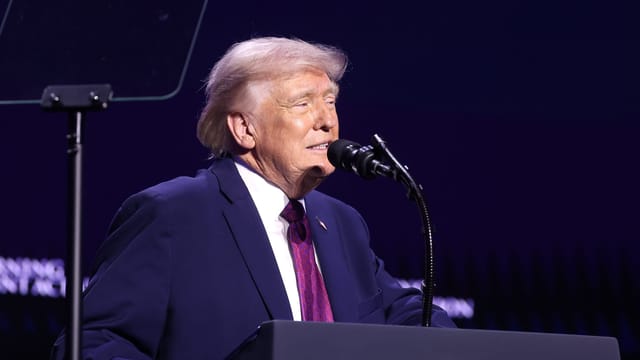
But “the United States can’t take take of day care,” announced Trump. Same goes for funding Medicaid and Medicare.
He said the federal government had more important things to do than addressing child care costs (for over 500,000 Ohio households with young children) or protecting health insurance (for over 5 million Ohio seniors and low-income residents).
“We’re fighting wars,” Trump huffed. “We have to take care of one thing: military protection,” he stressed after asking Congress for an extra $200 billion to fund his unauthorized, unprovoked war in Iran on top of the $1.5 trillion he put in his budget for defense spending.
Not exactly what the average Ohio family, spending about 29% of their income on care for two kids, expected from the “I alone can fix it” guy who won the state three times.
Not exactly what working class Ohioans, who broke hard for Trump in 2024, expected from someone elected to tackle the cost of food, housing, and health care.
Not exactly what older Ohio voters on fixed incomes, who powered Trump’s victory, expected from the man who promised not to touch Medicare and now calls it too expensive for the federal government to cover.
The state that handily bought what the Trump ticket was selling two years ago could well have buyer’s remorse in 2026.
This story is republished from the Ohio Capital Journal. View the original article.