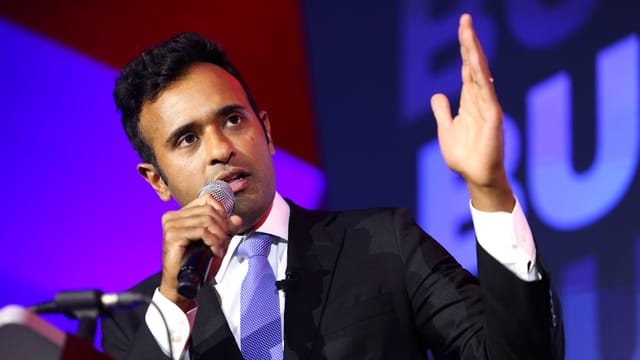

TOLEDO, Ohio — Former Social Security Commissioner Martin O’Malley warned Ohio retirees Friday about Vivek Ramaswamy’s stated willingness to consider privatizing Social Security and investing the program’s money in the stock market.
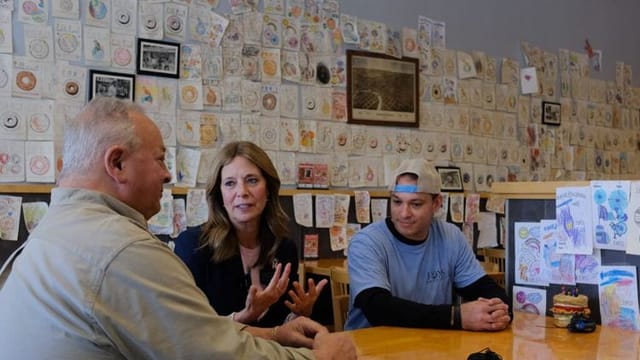
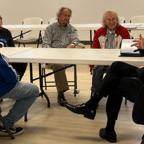
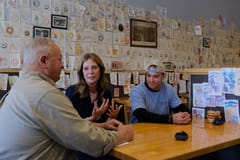
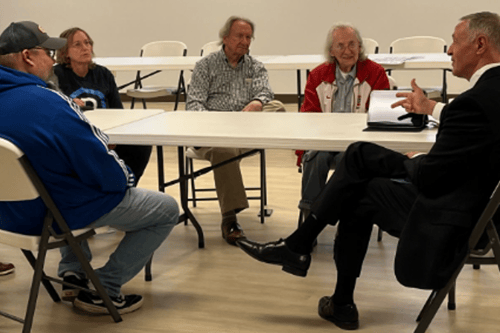
“Social Security is on the ballot,” O’Malley said during a Sept. 25 roundtable in Toledo with the Ohio Alliance for Retired Americans, Ohio AFL-CIO and AFSCME Local 8.
O’Malley is not speaking about the program from the sidelines. The former Maryland governor served as commissioner of the Social Security Administration from December 2023 through November 2024, overseeing the federal agency responsible for retirement, disability and survivors benefits.
An Ohio governor cannot rewrite Social Security. Congress sets the federal program’s basic structure, benefits and financing. But Ramaswamy’s comments about Social Security are now part of the Ohio governor’s race as O’Malley and retiree and labor groups point to them alongside Ramaswamy’s positions on Medicaid, a program administered by states within federal requirements.
Ramaswamy called Social Security privatization a ‘reasonable conversation’
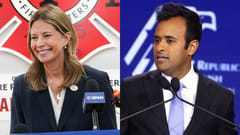
Ramaswamy has left little ambiguity about his willingness to reconsider how Social Security operates for future beneficiaries.
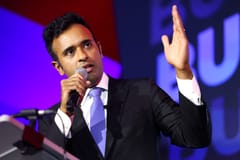
Asked whether “privatization or partial privatization” of Social Security would be on the table, Ramaswamy replied: “I think, in principle, in the long run that’s a reasonable conversation to have.”
The comments resurfaced in August as Ramaswamy campaigned for governor.
That was not an isolated comment.
During his 2023 presidential campaign, Ramaswamy argued that past Social Security surpluses should have been invested in a diversified portfolio instead of under the existing system.
“If we had just allowed that money to be invested in the same way that your financial advisor would — in a diversified portfolio — we would be swimming in surplus today,” Ramaswamy said.
He repeated the argument in a 2024 interview with AARP, saying the country should have allowed individuals or the government to invest Social Security money “in the stock market and in bonds and otherwise.”
That approach would represent a major change from the current system. Social Security trust fund reserves are invested in U.S. Treasury securities, not private stocks, and monthly Social Security benefits do not rise and fall with stock market performance.
AARP has long opposed Social Security privatization, arguing that retirement benefits should remain separate from private investments and protected from market losses.
‘I don’t like the existence of those policies’
Ramaswamy has also used much broader language when discussing Social Security, Medicaid and welfare spending.
In a video publicized this month, Ramaswamy discussed congressionally authorized payments for Social Security, Medicaid and welfare programs before saying, “I don’t like the existence of those policies.”
He continued by saying he would vote to “significantly constrain” much of the welfare state and impose work requirements.
Ramaswamy has separately said Medicare and Medicaid were mistakes. Asked in a 2024 interview whether the programs should have been created, he said, “I believe they were, with the benefit of retrospect, particularly Medicaid.”
Unlike Social Security, Medicaid has a direct connection to the office Ramaswamy is seeking. Medicaid is jointly funded by the state and federal governments but administered by states under federal requirements. States make consequential decisions involving benefits, provider payments and other parts of their Medicaid programs within those federal rules.
That gives Ohio’s governor and state government substantial influence over a health program covering millions of Ohioans.
Ramaswamy has drawn a line at current seniors
Ramaswamy has said he would protect Social Security and Medicare benefits already promised to current seniors while pushing structural changes to the programs going forward.
“No cuts for seniors on Social Security or Medicare,” Ramaswamy said during his presidential campaign. “We have to stand by the commitments we’ve already made.”
He followed that promise by arguing for changes to Social Security and saying its money should have been invested in a diversified portfolio.
That distinction — protecting current beneficiaries while entertaining major changes to the system for the future — is central to Ramaswamy’s record on Social Security and the record O’Malley brought to Toledo.
More than 2.6 million Ohioans receive Social Security
The debate involves a program relied upon by more than one-fifth of Ohio’s population.
According to Social Security Administration data, 2,611,577 Ohioans were receiving Social Security benefits in December 2025, including 1,900,292 retired workers and 299,284 disabled workers.
The numbers are substantial across northwest Ohio as well.
SSA county data show 94,710 Social Security beneficiaries in Lucas County, where Friday’s roundtable was held. Another 15,640 beneficiaries live in Sandusky County and 13,985 live in Seneca County.
Statewide, 21.9% of Ohio residents were receiving Social Security benefits at the end of 2025.
O’Malley told the Toledo roundtable that Ramaswamy’s record should be part of the decision Ohioans make in November.
His message to retirees was direct.
“Social Security is on the ballot.”