
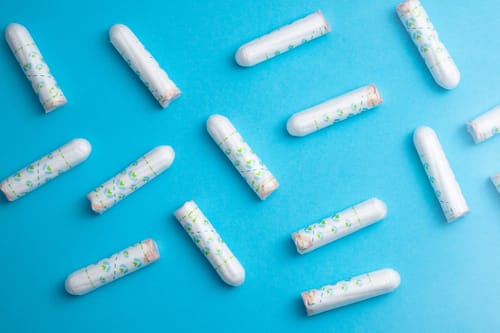

Incarcerated women would have free access to feminine hygiene products in Ohio correctional facilities if Gov. Mike DeWine signs a newly passed bill into law.
Ohio House Bill 29 passed unanimously in the House earlier this year and in the Senate during last Wednesday’s marathon session.
“This legislation codifies that female inmates must be provided as many feminine hygiene products as necessary at all correctional facilities, local, county and state, at no cost,” Ohio Sen. Susan Manchester, R-Waynesfield, said during Wednesday’s Senate session.
The bipartisan bill — introduced by Democratic state Rep. Latyna M. Humphrey and Republican state Rep. Marilyn John — also requires correctional facilities to allow female inmates to shower once per day while menstruating.
“(This) is an important piece of legislation that ensures female inmates in Ohio are treated with dignity and respect during their incarceration,” Manchester said. “Feminine hygiene products are a necessity, not a luxury.”
Former inmates shared during committee testimony their experiences of needing tampons and needs.
“There were times when pads were limited, tampons unavailable, or distribution controlled in a way that made women feel powerless and degraded,” said Antonette Smith, a former inmate at the Ohio Reformatory for Women. “Some of us had to choose between using toilet paper, reusing products, or going without altogether.”
Erin Noll, who served 12 years in prison, recalled begging for products.
“When I would run out of sanitaries I would have to go to the male officers working at the time and beg for sanitaries,” she said. “If they said no because they were locked in a closet and they didn’t feel like getting them for me at the time, I would have to go inmate to inmate begging them for their extra sanitaries.”
The federal government started offering free access to menstrual products for federal inmates starting in 2017 and 25 states have laws requiring free access to feminine hygiene products in prisons, according to the Ohio Justice and Policy Center.
“The absence of a formal policy leaves decisions to the discretion of prison staff, creating inconsistencies and opportunities for abuse,” Humphrey said during her sponsor testimony. “Passing H.B. 29 is not just about fairness — it’s about demonstrating Ohio’s commitment to humane treatment and basic public health.”
There were about 3,660 female inmates at the Ohio Reformatory for Women, the Dayton Correctional Institution and the Northeast Reintegration Center as of March.
Follow Capital Journal Reporter Megan Henry on Bluesky.
This story is republished from the Ohio Capital Journal. View the original article.