Note to the Ohio legislature: Many school districts are in fiscal trouble.
More than 120 Ohio districts are cutting budgets as charter and voucher spending nears $4 billion, prompting calls for citizenship rules on charter board members.

Type at least 2 characters to search.

More than 120 Ohio districts are cutting budgets as charter and voucher spending nears $4 billion, prompting calls for citizenship rules on charter board members.
The FBI's Cleveland raid on the Ohio Organizing Collaborative echoes a painful inversion: the bureau once sent agents to Mississippi to protect voter registration workers, not raid them.
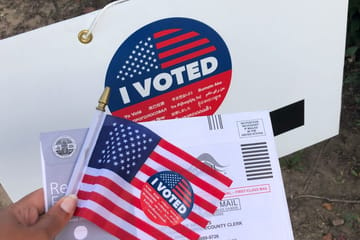
In another time, we used to often hear the adage that politics and religion don’t mix. But that was then. Since the Reagan era, prevailing GOP strategy has featured a strong outreach to evangelical Christians and conservative Catholics, and that embrace of Christian groups fueled the emergence of a public policy environment that enabled public funds to be transferred to private and religious schools in the form of educational vouchers. Never mind that most state constitutions like Ohio ban the use of public funds to support religious schools. But in Texas, which followed Ohio’s lead in offering a robust universal voucher program that allows students to attend private and religious schools at public expense, Lone Star State residents are finding out that maybe it’s not a good idea to mix politics and religion after all. The new controversy in the land of Greg Abbot and Ted Cruz involves the desire of several Islamic schools to acquire public funds from the state’s voucher program to subsidize tuition for their enrolled students. But there’s the problem. These schools aren’t, Texas pols might say, of “the Christian persuasion.” And in Texas and elsewhere, that’s an emerging issue. Recently, the New York Times highlighted the problem with these schools. The Texas governor said it out loud. We believe in parents wanting school choice for their children, but … … But don’t send any money to those people and those schools. (Dear Reader: Substitute the word those for the religion or sect that you don’t want public money to be sent to in support of their educational and spiritual programming.) So much for the idea of universal education vouchers. What is going on now in Texas is a controversy long predicted by public school advocates here in Ohio who are strongly anti-voucher and oppose the diversion of more than $1 billion annually in public funds to mostly religious schools under the guise of educational choice options for parents. A view that is growing in the Buckeye State is that since there are few limits on family income to be eligible for the EdChoice program, these vouchers are going to families that already had children enrolled in private and religious schools. Data from the previous school year showed that 90% of voucher students aren’t from low-income families, which itself is antithetical to the original idea of vouchers as a means to “save” low-income students from “failing public schools.” Just like the old saw of not mixing politics and religion, the idea of vouchers being designed for low-income students was from another era. Moreover, the great majority of new voucher students have never attended public school, where the voucher only serves to offset part of the tuition payment already incurred by families whose income was substantial enough to enroll their children prior to vouchers being available. Since the controversy in Texas served to illustrate a flaw in that state’s voucher policy beyond the idea of sending public funds to support religious schools, it has also helped to illuminate some additional thinking in Ohio about how wrong state policy is with the EdChoice scheme. In a recent column in the Cleveland Plain Dealer , Dan Heintz, a teacher and member of the Cleveland Heights-University Heights Board of Education, also said something out loud that perhaps Greg Abbot and other strong-minded Texans might want to think about as they fine-tune their new voucher system. “Allowing a billion dollars a year of taxpayer money to be hijacked by the unconstitutional EdChoice voucher program will be hard for GOP legislative candidates in November. Too many of the voters they rely on have recognized the dirty truth of EdChoice: If your family is not receiving a voucher, your family is paying for a voucher.” As the voucher wars heat up in this election year, we have several interesting developments to watch. In Texas, we have the incredible situation of Muslim schools suing the state for violating the constitution because of alleged discrimination shown against them in being excluded from the original voucher invitation. In Ohio, a school board member reminds the public that whether or not you receive a voucher for whatever kind of private or religious school, you are still paying for it. And through it all is the lingering constitutional issue that the Ohio EdChoice program presents to anyone who has read its Article VI, Section 2: “The General Assembly shall make such provisions, by taxation, or otherwise, as, with the income arising from the school trust fund, will secure a thorough and efficient system of common schools throughout the state; but no religious or other sect, or sects, shall ever have any exclusive right to, or control of, any part of the school funds of this state.” Whether it is a Christian or a Muslim school located in Texas or Ohio, and whether we have any family members enrolled or not, we are paying for it. And what was that talk about choice? As we continue thinking about the voucher wars known in Ohio as EdChoice, forget about the tired arguments about saving children from failing schools. You can also forget about whether we should be supporting any kind of religious school, whether Christian or Muslim. Once again, I call on Republican politicians to go back to school and face mandatory enrollment in a “Science of Reading” class. The prompt for the politicians to read is this clause: “…no religious or other sect, or sects, shall have any exclusive right to, or control of, any part of the school funds of this state.” Dear Speaker Huffman and Senate Education Chairman Brenner: can we once again assist you in understanding the meaning of no? This story is republished from the Ohio Capital Journal. View the original article.
State Rep. Jamie Callender, come on down! Join the rest of your bullying GOP colleagues as they continue the assault on democracy in Ohio. After all, it was no less than House Speaker Matt Huffman who famously said in 2022 that “we can kind of do what we want.” It seems that Callender has taken Matt Huffman’s observation to heart. Here’s why. On Feb. 3, the otherwise mild-mannered representative from Lake County introduced Ohio House Bill 671, a measure that would cut state funding from any school district that singly or with others challenges the distribution of state funds to private and religious schools under the education voucher program. Come to think of it, this is much worse than bullying. Callender’s bill is “legislative extortion,” a term former Democratic Ohio state Rep. Steve Dyer used in alerting the state’s citizens about the measure introduced in the House. Here is how the extortion would work, according to the language of the bill: “The Department of Education and Workforce shall release withheld funds to the school district only upon the termination of the legal action or the district’s withdrawal from the action.” If we apply our Science of Reading skills by examining that passage, the phrase “only upon the termination of the legal action” could not be clearer in its meaning and intent. Callender’s bill is designed to intimidate school districts that are part of two coalitions challenging a law that is taking more than $1 billion state tax dollars per year otherwise used to support public schools and transferring those funds to private and religious schools for voucher student tuition. The coalitions, the Ohio Coalition for Equity & Adequacy of School Funding and its partner, Vouchers Hurt Ohio, represent more than half of the state’s school districts that are joined in testing the constitutionality of the universal school voucher program. According to Dyer’s analysis, if the bill passes, it would affect the funding for about 700,000 students enrolled in the districts that joined the lawsuit challenging the constitutionality of the universal voucher program. Worse yet would be the probable insolvency of innumerable public school districts that would not be able to increase their local millage levels through district ballot measures to support necessary higher property tax rates. Callender’s attempt to intimidate districts supporting the lawsuit stands in stark contrast to the decision of Judge Jaiza Page of Franklin County Common Pleas Court, who heard the coalitions’ challenge to state funding of non-public schools. In June 2025, Page ruled in part that the state universal voucher program was unconstitutional because it violates language that called for the support of a system of common schools. Moreover, the fact that the Ohio Constitution in Article VI, Section 2 states that “no religious or other sect, or sects, shall ever have any exclusive right to, or control of, any part of the school funds of this state,” helped determine the issue in favor of the plaintiffs, viz., the Ohio E&A Coalition and Vouchers Hurt Ohio. In Ohio, the beneficiary of most of the voucher funds are religious schools, with parochial schools receiving the lion’s share of state voucher funds. As expected, the voucher case will eventually find its way to the Ohio Supreme Court, with a stop at the 10th District Court of Appeals. No means no. No religious sects get no state funds. Is there any science in reading that? In Citizens United v. Federal Election Commission, the Supreme Court ruled in 2010 that prohibitions on corporate independent expenditures and electioneering communications are bans on speech. Such spending on advertising, according to the court, was a form of protected speech and could not be restricted under the First Amendment. Political spending was equated with speech, with some limits. If we could use that same reasoning, the restrictions placed on school districts who have chosen to join together and expend funds to stop the misuse of other public funds (but may be punished for doing so under HB 671) might be a violation of their First Amendment rights of speech, assembly and petition, à la Citizens United . Indeed, any court that might hear on appeal a Callender-type case where funds might be withheld from parties joined in a lawsuit due to their membership in a group involved in litigation should be reminded that the Supreme Court advised in 2010 that money is speech. And by threatening to withhold funds appropriated for public education from districts that are party to a lawsuit, that might appear to be a violation of their First Amendment rights to petition for redress. In the spirit of Citizens United, withholding money appropriated for public school districts that are part of a coalition is a violation of the First Amendment right of speech and assembly. Moreover, HB 671 and its threat to school districts who are members of the coalitions could amount to prior restraint, a primary holding of this Supreme Court ruling. This matter has evolved from policy to the political realm because of the GOP’s adversarial stance toward public education and favoritism toward private and religious schools. Republicans should be mindful of these words from the Citizens United decision: “political speech must prevail against laws that would suppress it, whether by design or inadvertence.” But with Jamie Callender’s attempt in HB 671 to quash dissent by extortion and punish school districts through withholding funds, he and the legislature by considering this bill may be violating the First Amendment. Public school districts who are not yet members of the two coalitions, take note. “Corporations are people, too” was the cry heard after Citizens United as Republicans rejoiced in the Court’s extension of First Amendment rights to these entities. If only Ohio Republicans could imagine public school districts as having the same First Amendment rights as corporations. This story is republished from the Ohio Capital Journal. View the original article.

It’s hard for me to offer a thank you to Vivek Ramaswamy for anything, but he truly deserves our thanks for a recent statement. Thank you, Vivek, in making the case for public education and demonstrating its true value to the nation. For someone who reportedly wanted to “detox” from social media only a week ago, your post on X stating that you would make the oral recitation of the Pledge of Allegiance mandatory in the state’s schools has provided added layers of meaning for the public to discern that public education is a public good. Unbeknownst to the Republican governor candidate, his tweet gives public school supporters added ammunition to hurl back at GOP efforts to fund private and religious schools though universal education vouchers that violate the Ohio Constitution. “We’ll say the pledge of allegiance every day at every public school after I’m elected,” Vivek wrote. He went on to say that, “We need more national unity, not less.” When examined further, his brief post reveals the fatal flaws in Republican efforts to establish a parallel, non-public system of education that violates the Ohio Constitution. Let’s look at a few flaws that Ramaswamy’s seemingly innocuous post brings to light. According to the Ohio Revised Code, “The board of education of each city, local, exempted village, and joint vocational school district shall adopt a policy specifying whether or not oral recitation of the pledge of allegiance to the flag shall be a part of the school’s program …” There is no requirement in that section of the ORC for private and religious schools to adopt policies that would place the oral recitation of the pledge as a regular part of the school program. That sentence is revealing because it shows that non-public schools can receive state funds but not be encumbered by the many laws and regulations that govern public schools. That’s having it both ways, an art that non-public schools practice so well. We’ll take your money, thanks, but don’t tell us that this or that law or regulation is mandatory in our (private or religious) schools. Hmmm. I wonder how Ramaswamy and Republicans privately feel about how public funds might go to non-public schools that might care less about instilling patriotism than inculcating their own brand of ideology and history. The idea or probability of a publicly funded religious school that teaches its students that the earth is only 6,000 years old readily comes to mind. With the current devolution of our society, where Republicans achieve a twofer by eroding public education as a way of destroying public employee unions, that idea is not farfetched. In addition to a possible future Pledge of Allegiance mandate for public schools, as called for in Ohio House Bill 117, where public and religious schools would be exempt from such requirements, there is another hidden structural flaw in Ramaswamy’s post that belies his words: “We need more national unity, not less,” Ramaswamy wrote. Huh? How does a parallel, unconstitutional yet publicly funded private and religious school system, funded by universal educational vouchers, contribute to national unity? Vivek said that we need more national unity. Explain how $1 billion taken from state school aid and given to other, non-public schools that are exempt from so much law and regulation, adds to national unity. Do these schools pledge allegiance to the state and embrace regulatory compliance in return for such cash? Hardly. Two years ago on these pages, I offered the views of Dr. Kenneth Conklin, a philosopher who is concerned about “community cohesion and settled social bonds,” along with cultural fragmentation. Here are his considered views: “If an educational system is altered, its transmission of culture will be distorted,” Conklin wrote . “The easiest way to break apart a society long-term without using violence is to establish separate educational systems for the groups to be broken apart.” (Emphasis mine.) How do we get more national unity by establishing separate educational systems? Dr. Conklin added some other thoughts that Ramaswamy and other Republicans such as Ohio Speaker Matt (“We can kind of do what we want”) Huffman and Senate Education Chair Andrew (“Public education in America is socialism”) Brenner might reflect on as our national unity continues to deteriorate. “A society’s culture can survive far longer than the lifespan of any of its members, because its educational system passes down the folkways and knowledge of one generation to subsequent generations. A culture changes over time, but has a recognizable continuity of basic values and behavioral patterns that distinguishes it from other cultures. That continuity is provided by the educational system.” Ramaswamy says that he is concerned about national unity. So am I. Indeed, that continuity is provided by a common school system. If Ramaswamy is truly concerned about national unity, we should await his announcement about the corrosive effect of vouchers, their damage to community cohesion, settled social bonds, and cultural fragmentation. This story is republished from the Ohio Capital Journal. View the original article.

Ohio school board members are increasingly opposing the state’s expanded voucher program after a court ruling deemed it unconstitutional, fueling a growing push to defend public education funding.